
Project
From order to delivery: operations management for a concrete products manufacturer
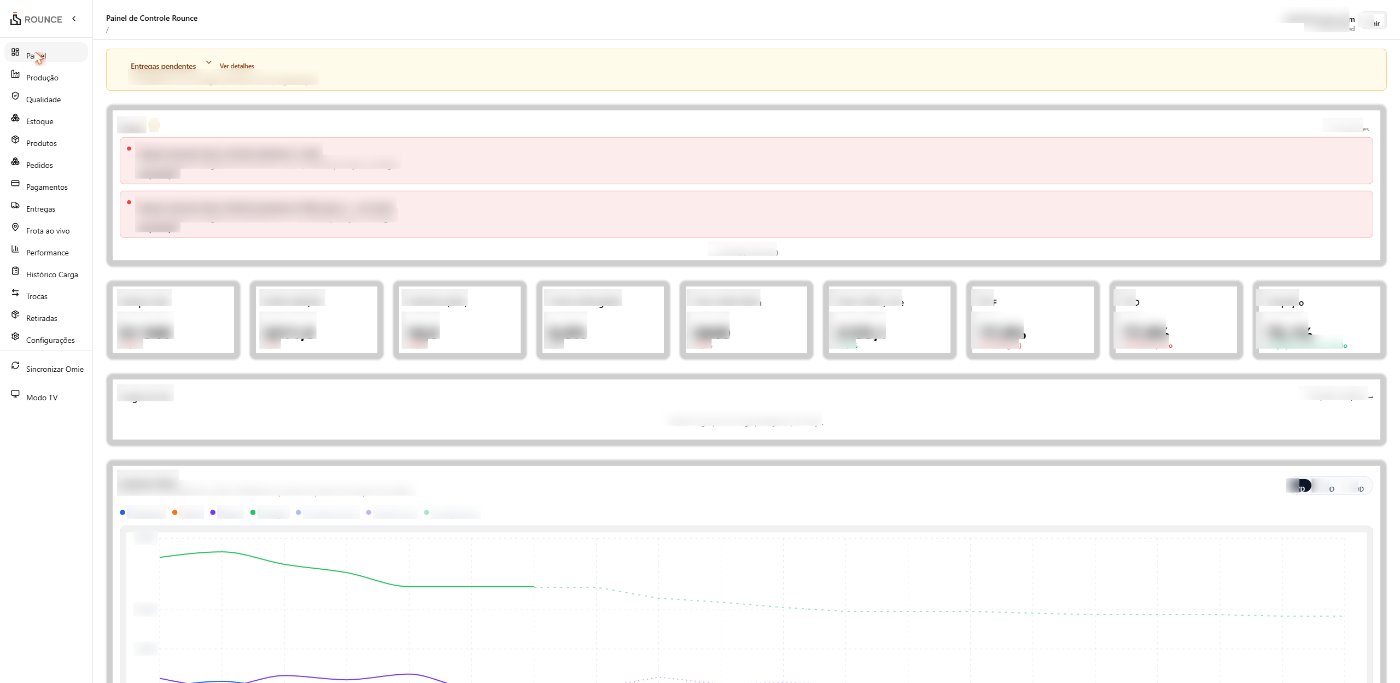
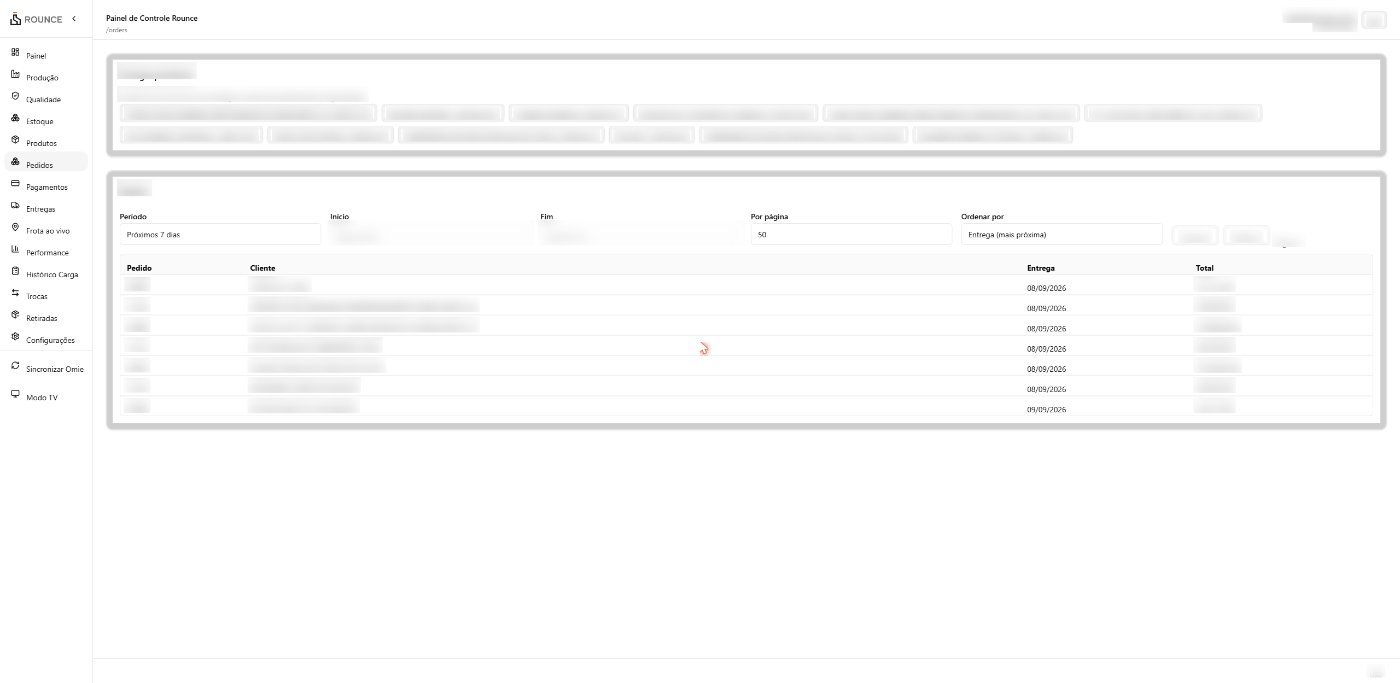
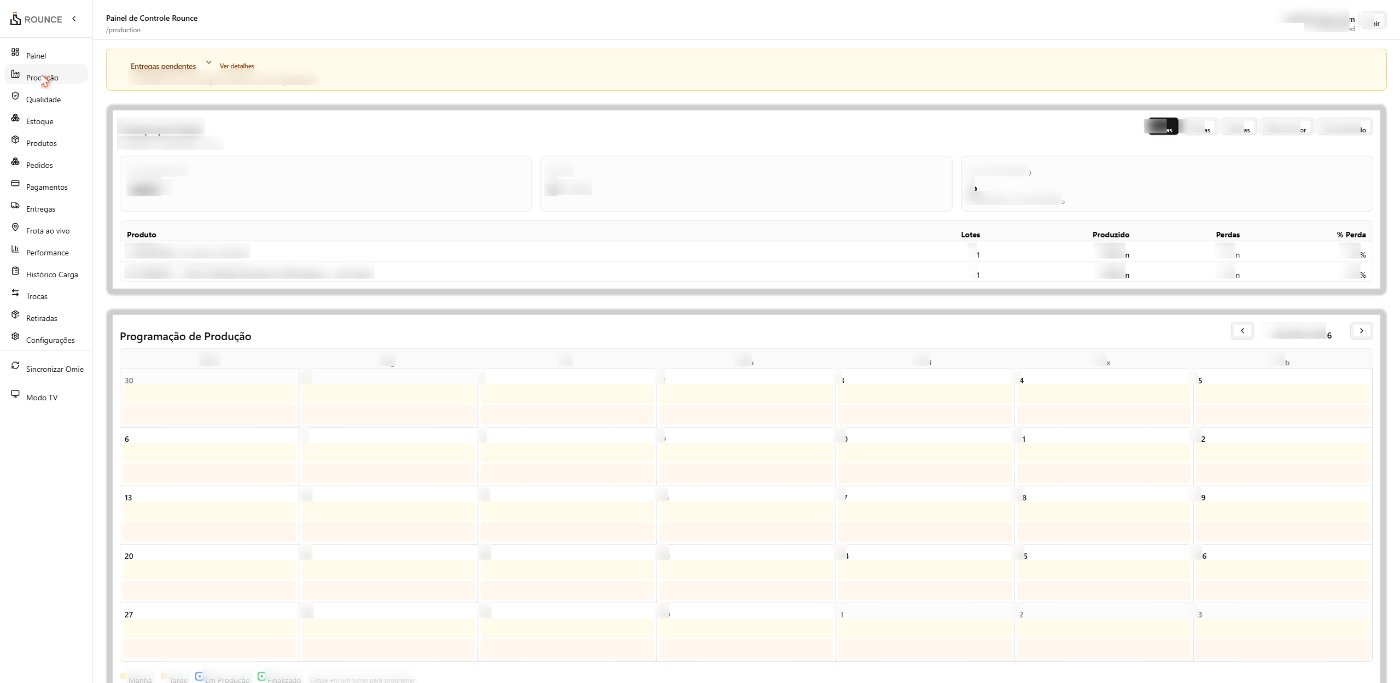
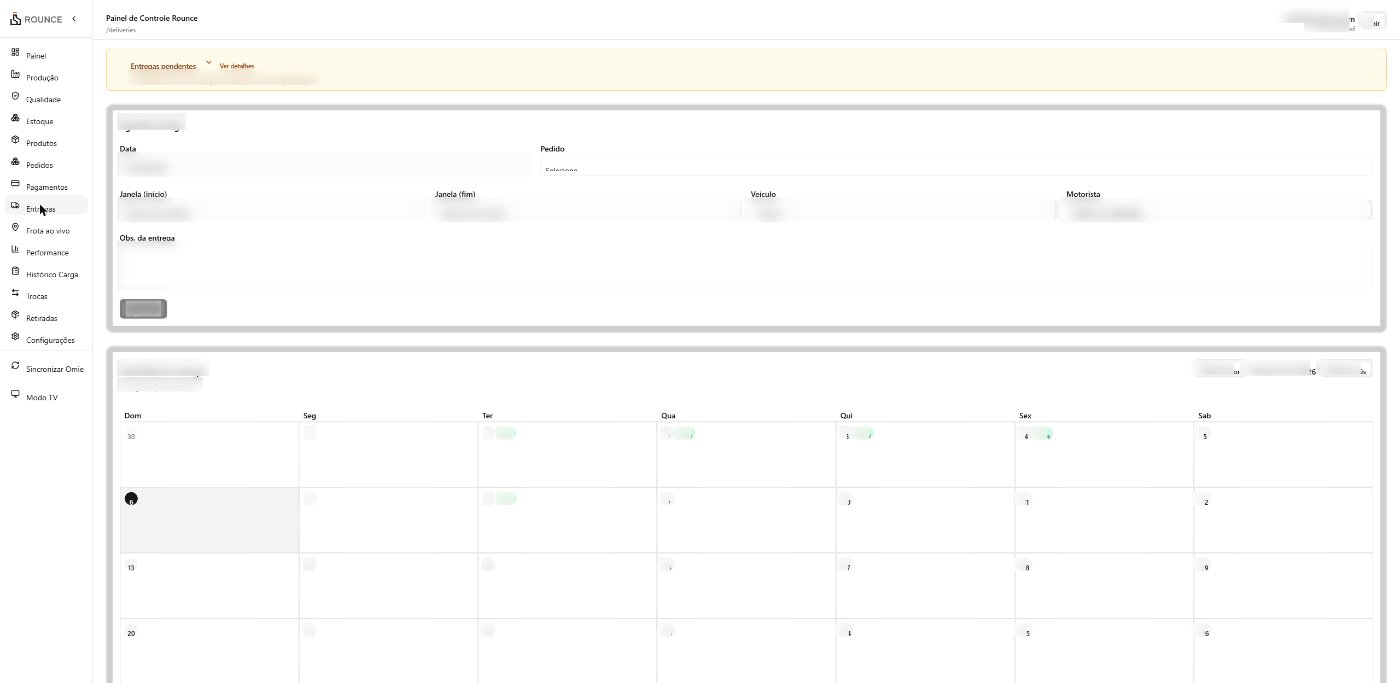
An operations system built for a manufacturer of concrete products, synchronized end to end with the company's ERP. The client is confidential: the screens below are real, with data blurred on purpose.
Project facts
- Sector
- Concrete products manufacturing
- Client
- Confidential
- Status
- In production
- ERP integration
- Synchronized end to end
- Related
- Sales CRM for the same company
The problem
The company already had an ERP. What it lacked was the operational layer:
- Orders and deliveries depended on separate controls, kept by different departments.
- Operational information moved manually between production, shipping and sales.
- The ERP recorded the outcome, but didn't follow what was happening during the day.
- Knowing the status of an order meant asking someone.
- The shop floor worked from a printed schedule or one passed along by word of mouth.
The solution
Integrated with the ERP
End-to-end synchronization with the ERP the company already used. Nothing was replaced: the system covers what the ERP didn't reach.
Production scheduling
What goes into each day, with capacity, priority and tracking of what was actually produced.
Deliveries and fleet
Scheduling with vehicle and driver, and the fleet's position in real time during the route.
TV mode
A panel on a large screen so the shop floor follows the schedule without asking or checking paper.
The screens
What changed
The client is confidential, but what changed in the operation can be described — and, in one case, calculated:
- Order, production, inventory and delivery now share one timeline.
- Duplicate data entry between the ERP and the parallel controls was eliminated.
- The shop floor follows the schedule on a large screen, without having to ask.
- The operation gained visibility from order to delivery.
- The status of an order no longer depends on who happens to be around to answer.
The bottleneck that can be calculated: one rescheduling a day
Rain at the job site, a delay on the construction site, a change of plans — about once a day a customer asked to postpone a delivery. The request itself took seconds. What was expensive was everything that came after it.
The salesperson called logistics and explained the reason. Logistics changed the date — but the forecast of material leaving inventory was kept in a spreadsheet, because the ERP didn't cover that part. So quantity, day and customer were written down on paper; the release of that material was rescheduled; and a future date was set that sometimes the customer didn't have yet, leaving the order pending.
The whole sequence took about 30 minutes from logistics and 10 from the salesperson. Two teams, every day, to move one delivery.
What changed in that task
From 40 minutes to under 2
The same rescheduling is handled directly on screen, with no paper and no parallel spreadsheet holding the inventory release forecast.
From two teams to one person
The salesperson handles it alone. Logistics didn't get faster at this task — it stopped being called for it.
About 10 hours a month
That's the logistics time no longer consumed: 30 minutes a day over 20 working days. It was the first number the company estimated.
About 12h40 for both teams
Logistics and sales together, in the same period — a little over a day and a half of one person's work, every month.
How this number was calculated
It's the company's own estimate, not a controlled measurement. It starts from one rescheduling a day, the time the old process took from each team and 20 working days a month. The calculation is shown here so you can check every part of it.
We deliberately don't convert it into money: hourly cost is specific to each operation, and a figure taken from another company's reality would say nothing about yours.
To use it, count how many reschedulings your operation has per day, how long each one takes today and how many people it involves. Multiply by your hourly cost. The result will differ from this one — and yours is the one that matters.
Modules built
Each one designed from the company's real process:
- Production
- Quality
- Inventory
- Products
- Orders
- Payments
- Deliveries
- Live fleet
- Performance
- Exchanges
- Pickups
Same company, second system
After this project, the same company asked for a sales CRM urgently. It was delivered separately so it could be used right away, and it's now being integrated into the operations system.
Does your operation look like this one?
Tell us how it works today. We'll reply by email.
Or write to contato@pro9digital.com